Showing posts with label BonnieHartRealtor. Show all posts

Wednesday, 17 February 2016

Bonnie Hart Shared How to Start Real Estate Business with No Money?


One of the Myth’s of real estate is that you have to have money. This is flat out not true, you can absolutely do deals with no money and credit. There are a few precautions Bonnie Hart shared, especially for beginners before explaining how to do deals with no money and no credit. Bonnie hart Realtor is a famous real estate consultant having long record of successful national and multi-national clients with their commercial real estate acquisitions. Bonnie Hart Mission Viejo has been so successful fir ever twenty years in the incredibly competitive sales environment.


Having money and credit can certainly make it easier to do deals.  It is crucial however to make sure the deal still meets your criteria.  At no point in time should you bend your criteria and make the deal work by putting in your own money.  For instance, if you are considering putting in 10% of your own money to make it meet your 70% LTV criteria, you should lower your offer or pass on the deal.  The risk has to be warranted, in fact, all deals should be good enough where you do not have to use any of your own money.  Using your own money and improve the return without unneeded risks. 

Here are some ways you can do real estate deals with No Money and No Credit
Use Private Money – Cash is king and having private money backing can allow you to do deals without any of your own money.
Partner – If you have a strong business plan with solid exit strategies and a successful track record there is a ton of money out there to fund 100% of your deals.  Make it a win-win for your partners and make it happen.
Find deals with incredible numbers – If you are an expert at finding incredible deals, doing and exiting the deals then people will fight over funding your deals.
Wholesale, Bird Dog – There is no risk, money or credit needed in getting a deal under contract or locating deals for investors.
Subject To, Seller Financing, Lease Options – Taking title to a property subject to the seller’s existing mortgage, getting the seller to carry financing or lease optioning a property are ways to do no money no credit deals

Tuesday, 20 October 2015

Stuyvesant Sale Typifies Boom in Real Estate

The $5.3 million sale puts on display the remarkable recovery of the Manhattan real-estate market 


Five years ago, the 11,200-apartment Stuyvesant Town and Peter Cooper Village was hurtling toward foreclosure, with nowhere near enough income to pay its monthly debt payments and its estimated value down to less than $3 billion—a far cry from its $5.4 billion sale price in 2006.

Times have changed.

Blackstone Group LP and Canadian pension investor IvanhoƩ Cambridge announced on Tuesday they were in a deal to purchase the 80-acre East Side complex for $5.3 billion. The pending sale puts on display the remarkable recovery of the Manhattan real-estate market since the downturn.

The rebound has been largely fueled by two factors. Investors who vanished in the depths of the downturn are hungry for any piece of the Manhattan skyline, particularly foreign pension and sovereign-wealth funds like those of Norway and Middle Eastern countries, which have spent billions in the past few years.

In addition, surging demand from a growing population has sent average monthly rents soaring to new highs of just over $4,000, up from $3,496 at the end of 2010, according to appraisal firm Miller Samuel Inc.

Developers have piled into once-unlikely locales such as the area around the Gowanus Canal in Brooklyn and the Astoria waterfront in Queens even as central Manhattan rents keep grinding upward.

“There is a shortage of apartments in New York City,” Jonathan Gray, Blackstone’s head of real estate, said at a news conference announcing the sale Tuesday. “We think rents will go up—that’s part of the reason we’ve been investing so much.”

Of course, Stuyvesant Town is no ordinary property. 

Back when MetLife Inc. sold the complex in 2006 to a venture led by Tishman Speyer Properties, the deal was a marker of the bullish bets investors were making on Manhattan real estate.

The annual operating income from the property was just $112 million, only about half as much as was needed to cover its annual mortgage payment. The buyers expected to raise rents substantially and rapidly convert rent-regulated apartments into lucrative market-rates units. The plan was to bring income up $336 million by 2011, according to loan documents.

But the Tishman Speyer group proved far off in its projections. Income rose only modestly, quickly leaving the group without money to pay its debts. When the owners surrendered the property to creditors in 2010, the outlook was so bleak that its appraised value came in at $2.8 billion; analysts projected losses for the bond investors who owned the $3 billion mortgage and controlled the property.

“I thought it was going to be hard to figure out how to get them paid,” said Rafael Cestero, the city’s housing commissioner at the time.

At Stuyvesant Town, growing rents and a gradual conversion of more rent-regulated units to market rates brought the income up each year. With about 45% of the complex’s residents still paying the regulated rents—down from 71% in 2006—income is above $200 million a year, people familiar with the numbers said.

In short, that means the property’s income nearly doubled since 2006, while its price stayed roughly the same.

Under the terms of the deal, a large chunk is staying regulated for at least 20 years. The complex will be required to keep 4,500 apartments available to residents making up to about $130,000 a year for a family of three. Another 500 would be reserved for moderate income families making up to $62,150 a year. The cost is about $225 million, city officials said.

The unusual agreement—crafted between city officials and Blackstone executives—came in part because residents at the complex have proved politically adept in protests against its owners over the years. In 2006, some elected officials tried to block the deal. Later, Bill de Blasio, then just a mayoral aspirant, stood with Stuyvesant Town tenants vowing to keep the red-brick buildings affordable to middle-income residents.

Blackstone executives knew the history. On Tuesday, Mr. Gray said he didn’t feel comfortable moving forward unless the city and the tenants’ association gave their approval. 


This Content was originally posted on: Eliot Brown

Tuesday, 13 October 2015

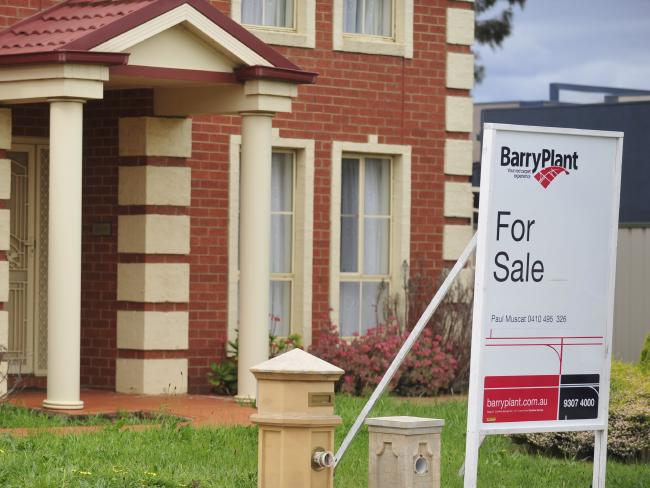
Real estate industry insiders say property prices look set to fall


BUBBLE IS ‘BLATANTLY OBVIOUS’

Lindsay David, founder of LF Economics and author of Australia: Boom to Bust, said all the data showed it was “blatantly obvious [that] Australia has one of the largest housing bubbles in modern Western history”.

“APRA since its inception has done nothing to stem the insanely rapid sums of debt Australian households have accumulated which now stands at 120 per cent of GDP,” he said. “This is simply an insane figure.”

Mr David said his research suggested the major banks were setting their mortgage teams incredibly high growth targets, and that the regulator’s recent macroprudential rules introduced in a bid to slow investor loans had simply shifted banks’ focus back to lending “irrational sums of debt” to owner occupiers.

“When you dive into the mortgage books and balance sheets of our major banks who have been lending to homebuyers like there’s no tomorrow, they resemble a toxic dump of debt with hardly a shred of capital to cover a significant fall in house prices or mortgage defaults,” he said.

The reality, he said, is that Australia’s banking system created too many artificial property buyers through rapid mortgage debt growth.

“History tells us it doesn’t matter how many new dwellings a nation builds, when leveraged speculation if rife, there will always be more buyers than sellers in the housing market followed by the complete opposite occurring,” he said.


WHAT DOES THAT MEAN FOR YOU?

Don’t panic, because this is normal.

That’s the message from Tim Lawless, senior analyst at property data firm Core Logic.

“Property values do go backwards, we’ve demonstrated that plenty of times in the past,” he said.

“In fact the past correction, between October 2010 and June 2012, we actually saw values fall by about 7.4 per cent (at a capital cities level), which is about what Macquarie Bank is saying right now,” he said.

“I think a 7.5 per cent fall is probably a reasonable expectation when you look back through history,” he said.

“We’ve already seen the housing market go through a really strong growth phase for nearly three and a half years now. That’s quite a long growth phase and normally you wouldn’t expect to see prices grow at this pace for so long,” Mr Lawless said.

He said particular markets across the country that are more exposed to a downturn in property prices are the area where there has been the most price growth and where conditions have been “imbalanced”.

Rather than talk of bubbles bursting, Mr Lawless said those markets which have been booming in recent years will see a price “correction”.

“During periods when values have gone backwards, they generally haven’t gone backwards by a substantial amount,” he said.

“I’d say that if the past is anything to go by, and this is what we’ve got to look forward to, we will see some falls in the larger capital cities, particularly in Sydney and Melbourne because we have seen values grow at a substantial pace compared to incomes and rents. It makes sense that values will rebalance themselves,” he said.

Mr Lawless said while the big “macro” market numbers are favoured by banks, househunters should look closer to home.

“I think they need to look at their own plans. For anyone who’s looking at holding their home for a long time, if they’re buying a principal place of residence and are expecting a long tenure there then it’s not that big a deal to get the timing right,” he said.

“But if you are an investor, or if you’re looking at potentially selling it in relatively short space of time, then the timing becomes a lot more important,” he said.

“At an individual suburb level, and down towards the micro areas of a neighbourhood, there are always going to be different opportunities and different challenges in the market. So it’s up to individual buyers to really nut out what the conditions are like below that capital city boundary and look at what’s happening in the particular markets,” he said.
PRICE CRASH NEEDS A TRIGGER

Leading economist Saul Eslake played down the immediate danger of a large fall in house prices. For that to happen, he said, there would need to be a combination of a significant number of forced sellers through mortgage defaults and an oversupplied market.

The first is unlikely due to low interest rates which are likely to remain so for some time, and relatively large buffers built up by mortgage holders who have taken advantage of those low rates.

“I don’t think there is any immediate danger of a significant fall in house prices — 7.5 per cent is remarkably precise and you’re brave to be that precise in forecasts about the housing market,” Mr Eslake said.

He argued even though house prices might be overvalued, that didn’t mean they’re going to fall in the same way as stocks. With home ownership still at around 67 per cent, the majority of people own property to live in.

“I can accept that housing looks overvalued by various metrics, but that of itself isn’t the issue,” he said. “Asset prices are almost always overvalued or undervalued — the proportion of time that any asset is exactly at fair value is very small — but that doesn’t necessarily mean they will fall. Something has to happen to trigger that.”

Mr Eslake has previously predicted the probability of Australia falling into recession in 2015 or 2016 as the mining boom unwinds at around 25 per cent. He said the recession danger doesn’t come from house prices per se, but from homeowners forced to save more to pay off their mortgages, slowing consumer spending.

“The biggest risk is not to the financial system, because Australian banks are fairly well capitalised, and Australians have been historically reluctant to default on mortgage debt. It’s what they do to reduce the chances of that happening,” he said.

AMP Capital chief economist Dr Shane Oliver is tipping a 5-10 per cent fall, but more likely some time in 2017, and only if the RBA hikes rates. “My feeling is we’re on a period of deceleration, where prices continue to rise but at a much slower rate,” he said.

He pointed out that the so-called housing boom has only really been in Sydney and Melbourne, with half the capital cities already in decline, but particularly Perth and Darwin.

Dr Oliver said he puts the likelihood of recession at just 20 per cent. “The biggest worry is housing approvals are at very high levels, up around record levels recently, but it’s the momentum that counts,” he said.

“If they top out or go sideways, which looks likely, then the contribution to growth from housing construction will fall back to zero over the next 12 months.”


This Content was originally posted on: Kirsten Craze